Art
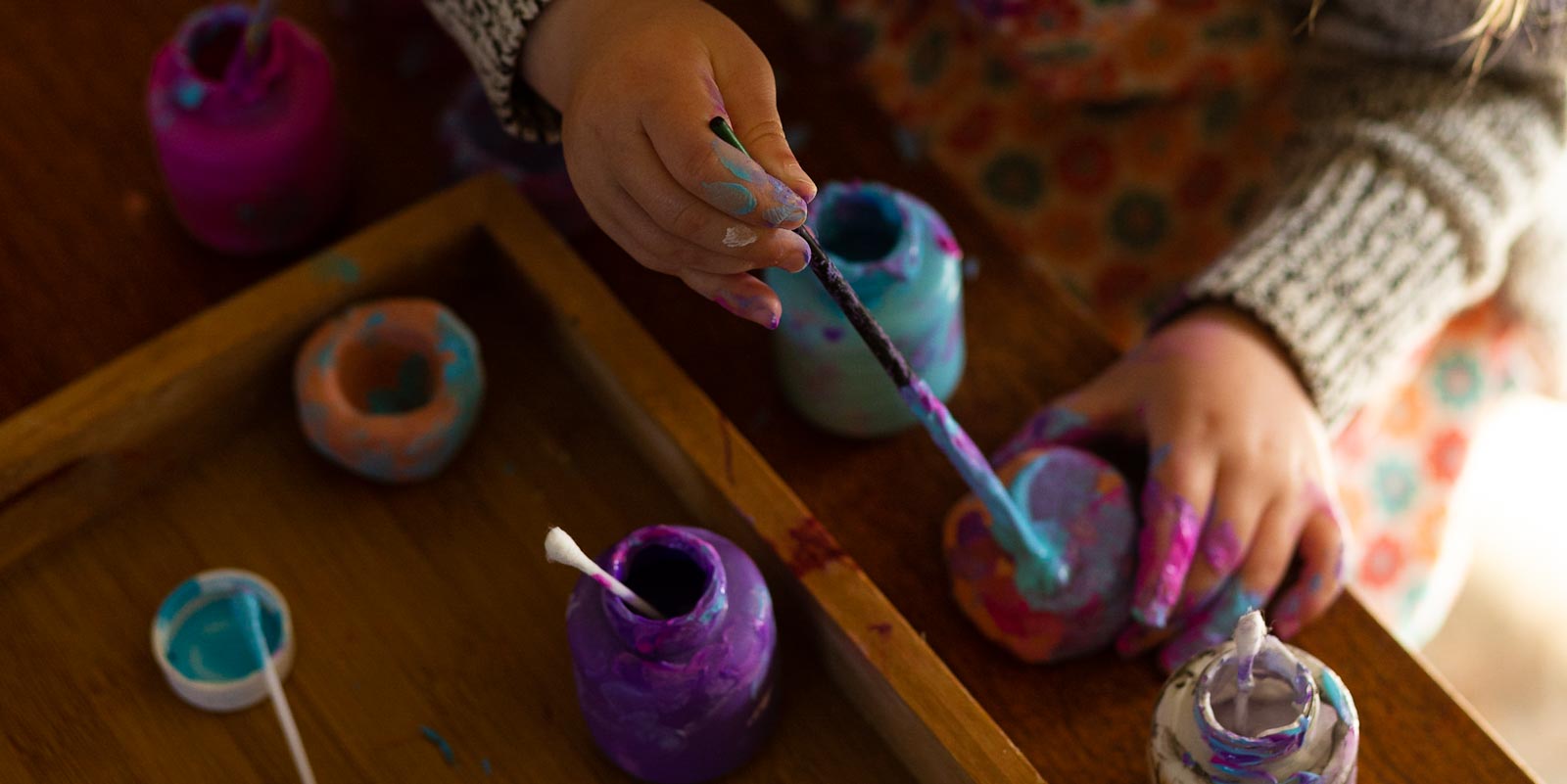
Children are never too young to participate in art and artistic play. Babies may be interested in art for the sensory experience, which is essential for their learning and development. Preschool children may use art for storytelling and communicating big ideas.
The benefits of art
The benefits of art include:
- creativity
- imagination
- mental health and wellbeing
- self-expression.
UNCRC
The United Nations Convention on the Rights of the Child states that children have the right to engage in art (article 31).
EYLF learning outcomes
Art aligns with the Early Years Learning Framework as it:
- provokes confidence, commitment and persistence (4.1)
- sparks curiosity, creativity, enthusiasm and imagination (4.1)
- involves transfering and adapting learning from one context to another (4.3)
- supports children to express their ideas and make meaning (5.3).
Learning opportunities
Explore types of art
Children can learn about different types of art:
- creative writing
- digital art
- multimedia art
- performing arts
- visual arts.
Learning experiences
Combine art forms
Educators can extend a child's interest in one area of art by combining it with another area.
Mixed media art combines different visual art forms, like painting and drawing. Multimedia art incorporates visual and non-visual elements like sculpture and sound.
Research Segni Mossi, an incredible project combining drawing and dance.